AnyManip
Predicting task-relevant motion, then turning it into robot actions.
BIGAI · Manipulation · Imitation Learning · Optical Flow
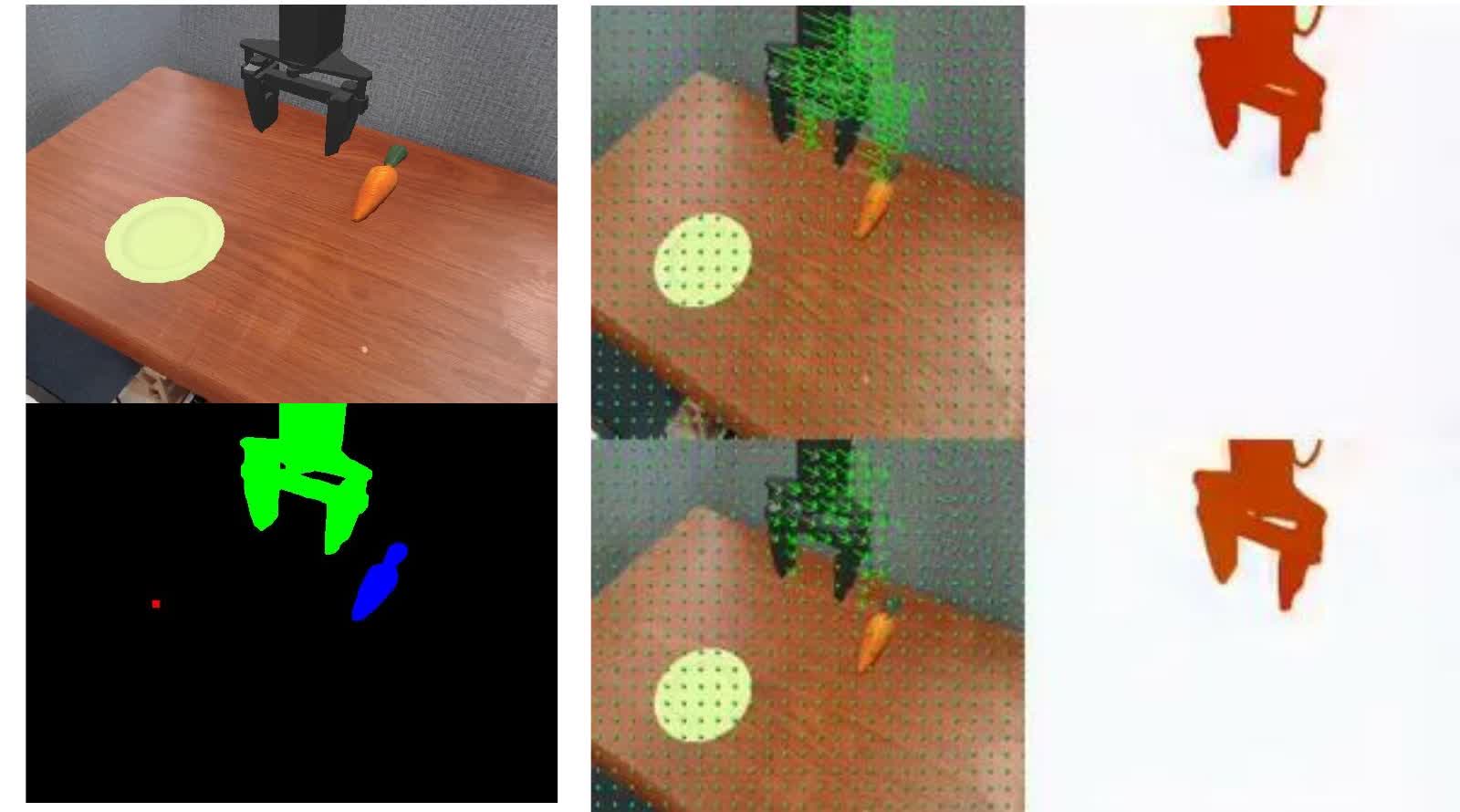
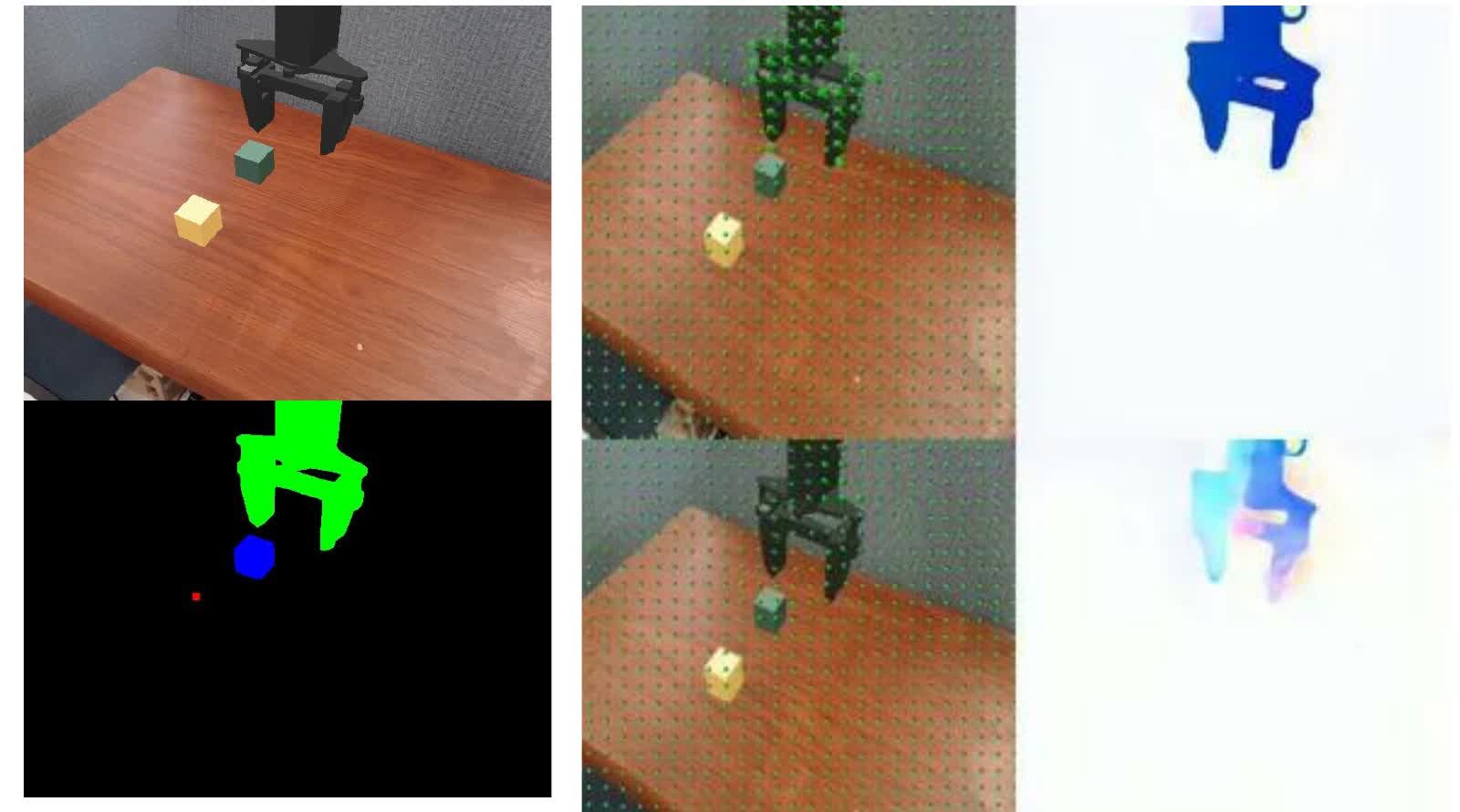
AnyManip treats motion as the bridge between visual understanding and robot control. A diffusion model first predicts task-relevant optical flow; a robot policy then combines that prediction with RGB observations and proprioception to produce actions.
Task-Conditioned Motion
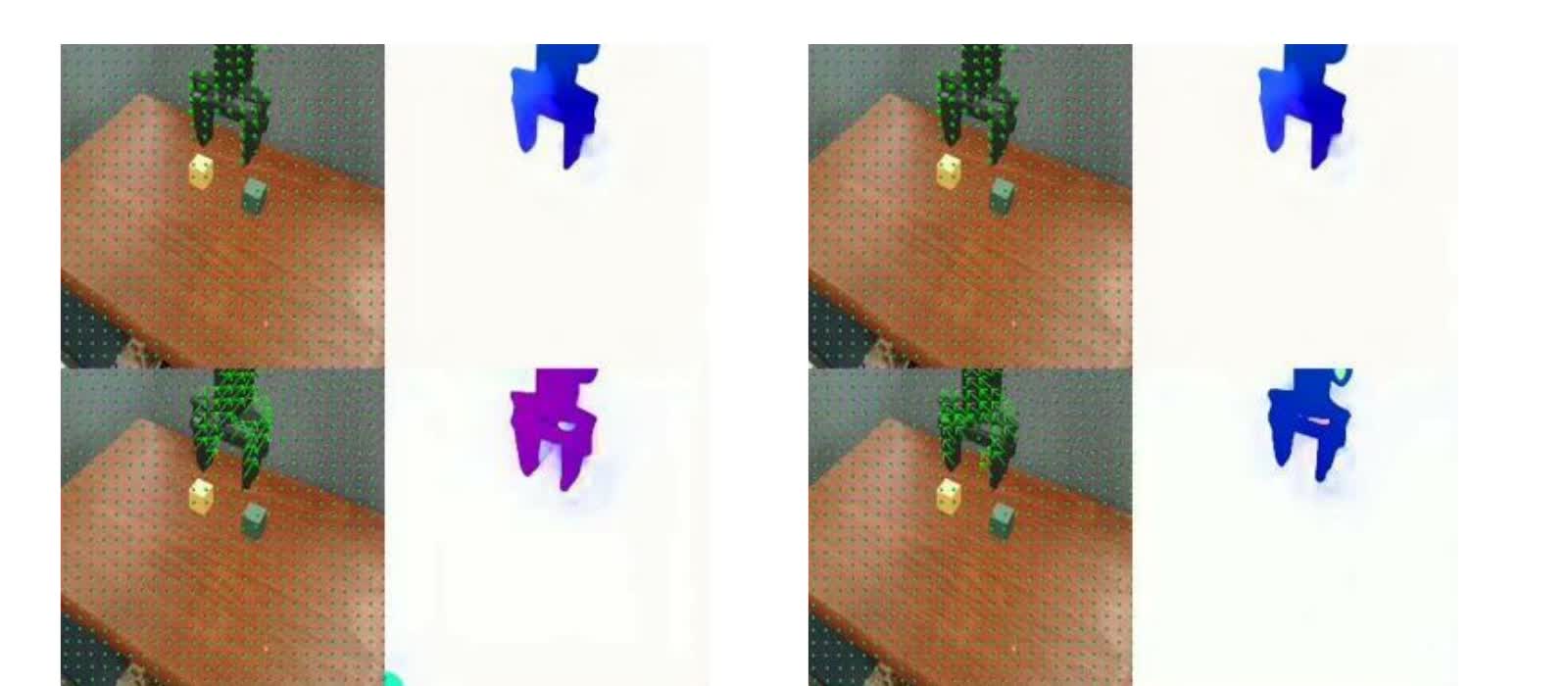
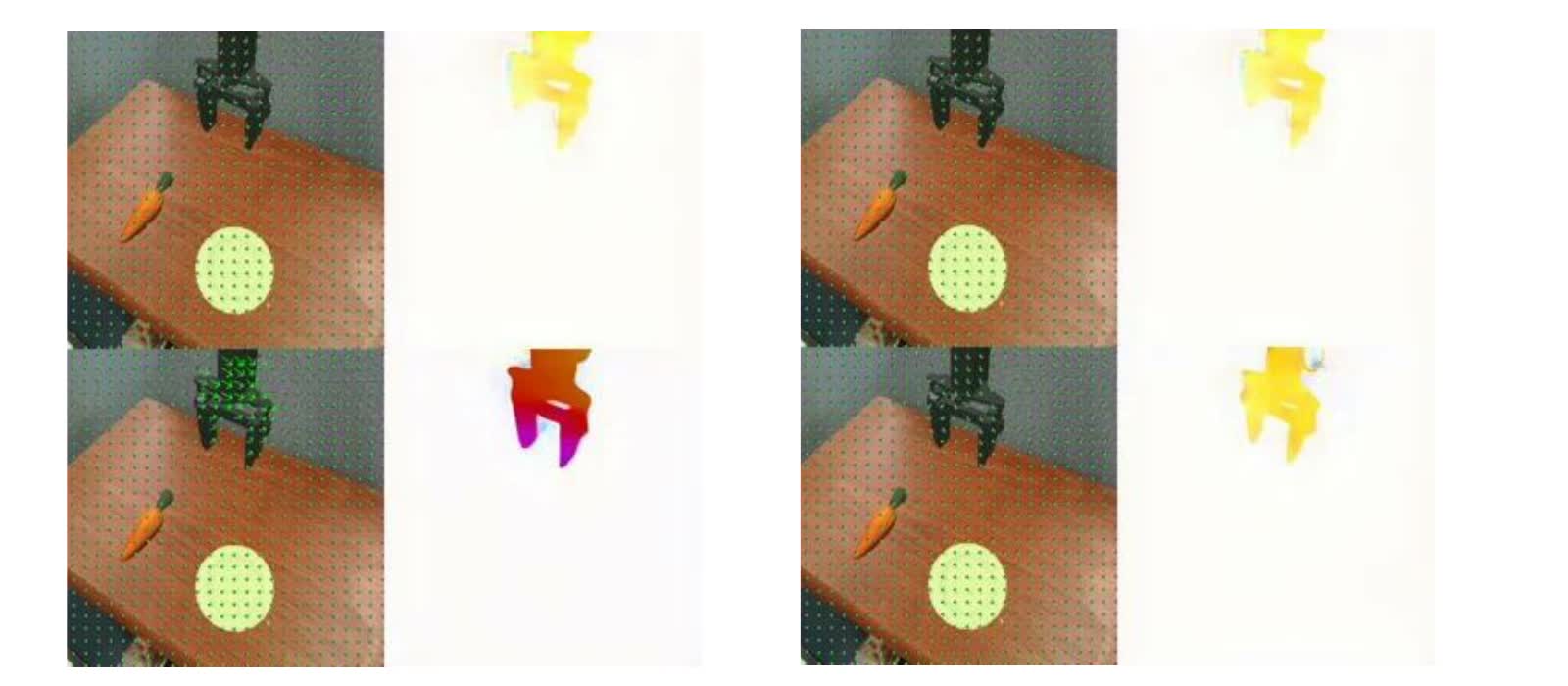
The flow model focuses on motion that matters for the instruction: where the gripper should move, which object should be manipulated, and how the interaction should unfold over time.
Training targets come from optical flow estimated in robot and human manipulation videos, including BridgeData V2, DROID, and RH20T. From an initial scene and a language instruction, the model predicts future dense motion for both the end effector and the object.
From Pixels To Actions
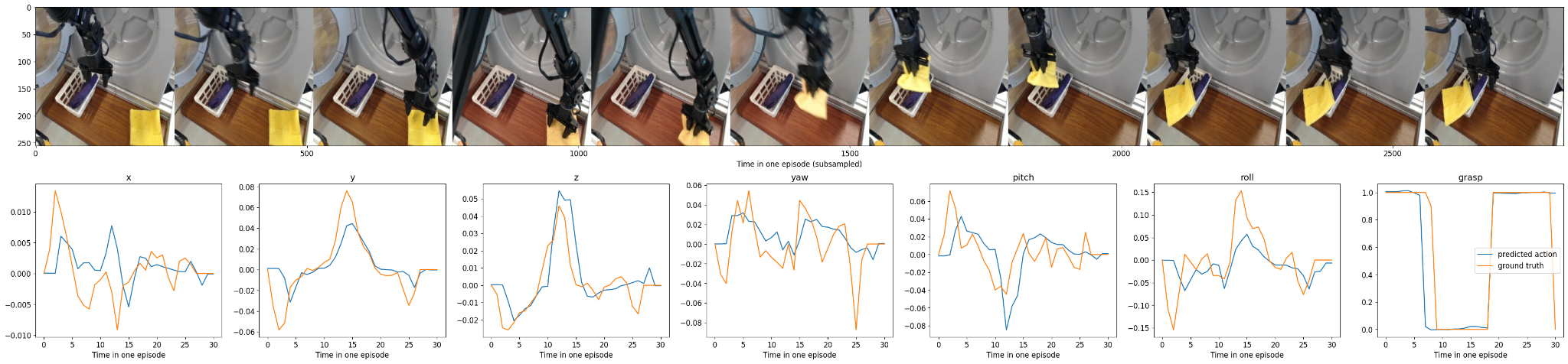
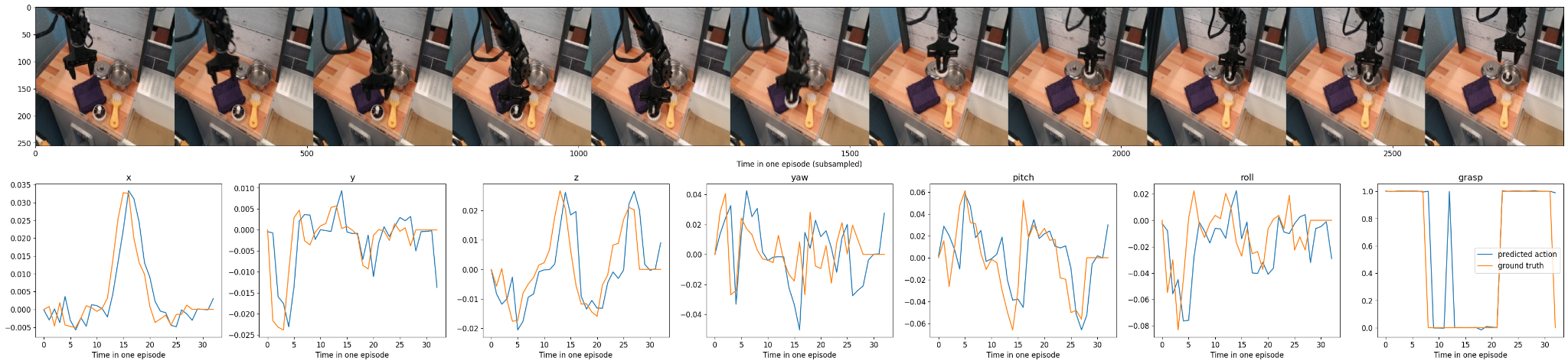
The action model combines the current RGB observation, predicted motion, and robot state. It predicts a sequence of Cartesian position, orientation, and gripper commands; the examples below show the scene and motion cues for two simulated tasks.
Predicted Actions Across Tasks
Later experiments compare policy predictions with demonstrated actions across seven channels: x, y, z, yaw, pitch, roll, and grasp. Each result pairs sampled episode frames with the predicted and reference action traces.
Why Flow?
Optical flow provides a robot-agnostic description of how a task should evolve. By separating motion prediction from action generation, AnyManip can learn from heterogeneous visual data while leaving embodiment-specific control to the policy.
This project was conducted at the Beijing Institute for General Artificial Intelligence with Peiyuan Zhi and Yang Yang, advised by Dr. Tengyu Liu and Dr. Siyuan Huang.